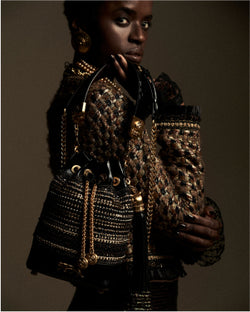
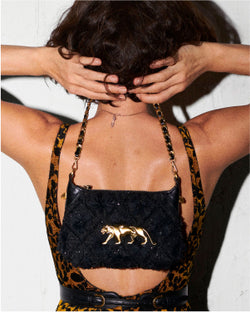
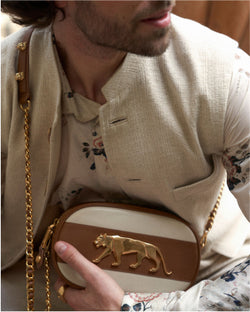
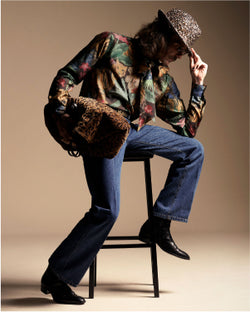
THE MET | SABYASACHI
BENGAL BYZANTINE BROADWAY
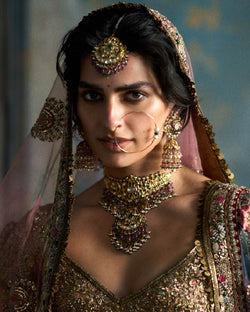
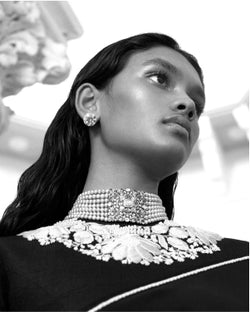
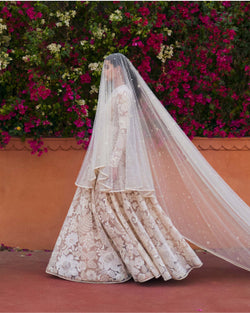
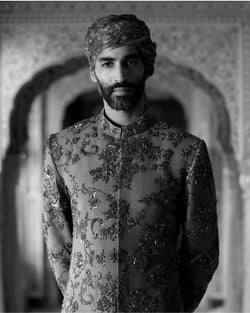
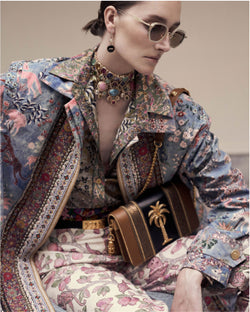
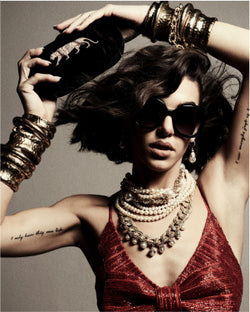
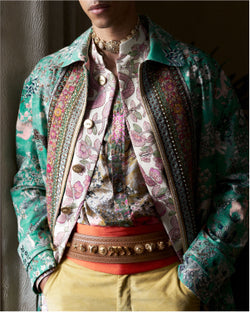
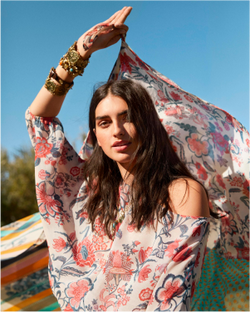
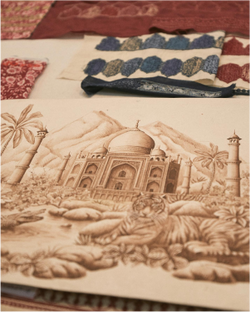
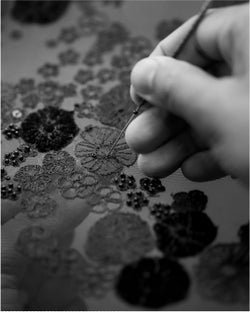
The Met | Sabyasachi collaboration is an exploration of how culture travels, evolves, and endures, drawing from 5,000 years of history preserved within the collection of
The Metropolitan Museum of Art in New York City.
For centuries, art, ornament, and craftsmanship have crossed borders through trade and
cultural exchange. With each movement, new ideas of beauty and identity were shaped.
Now, Sabyasachi reinterprets these shared histories through a contemporary lens,
transforming historic design into modern creations. The result is a collection of modern heirlooms, rooted in the past, crafted for today.
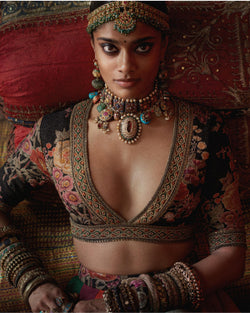
PANTOKRATOR PENDANT NECKLACE
For centuries, Byzantine icons made the monumental intimate. Sacred images appeared across the great spaces of churches, but also as precious objects to hold or wear.
They were not simply representations but objects through which to contemplate and approach the sacred.
An 11th–12th century ivory from The Met collection depicts “Christ Pantokrator”, a title meaning “Ruler of All”, holding the Gospel and raising his hand in blessing.
Intimate in scale, the four-inch carving possesses an extraordinary presence: frontal, composed, and commanding.
That sense of gravitas is reinterpreted with maximalist exuberance in a pendant crafted in 18-karat and 22-karat Gold. The sculptural image is framed by a 55.4-carat faceted Tourmaline, Sapphire, Spinel, Garnet, Iolite, Onyx, Jade, Jasper and Turquoise, amplifying the quiet monumentality of the original through colour, scale, and material abundance.
A small but powerful symbol of majesty and blessing, transformed through gold, colour, and scale into something monumental to hold close.
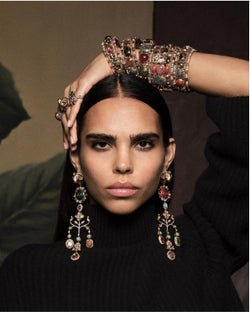
DIONYSOS CUFF
Dionysos, God of wine and revelry, rides a panther through an exuberant Roman tableau inspired by a 3rd century Roman sculpture.
Around him stand the four Seasons, unusually imagined as sturdy young men, presiding over a world of Bacchic celebration, abundance, and the rhythms of nature.
Carved in dramatic high relief, the ancient marble creates a landscape of light and shadow, with details believed to have once been highlighted with colour and gilding.
It is this richness of expression that inspires this cuff. Sculptural forms emerge from
18-karat and 22-karat Gold punctuated by cabochons of Garnet and Tourmaline.
This piece creates a contemporary interpretation of an ancient celebration of pleasure, abundance, and rebirth as witnessed by the annual return of each season.
THE ZODIAC RIVIÈRE
In the early 17th century, Mughal emperor Jahangir imagined a new language for coinage, where coins had traditionally recoded the words in month of their minting, he decreed that it should instead be represented by the constellation in which the sun rose: Aries for one month, Taurus for the next, and so through the zodiac. Unusual in both Indian and Islamic numismatics, these rare coins transformed the passage of time into image.
Jahangir’s celestial imagination is reinterpreted as a necklace in
18-karat and 22-karat Gold, with zodiac medallions inspired by coins in the
Department of Islamic Art at The Met, encircling the neck and descending
to a 49.87-carat faceted Tourmaline, accented with cabochons of Garnet and Jade.
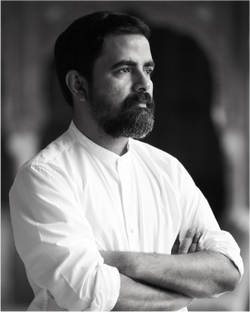
“This collaboration is about engaging with one of the world’s great collections of art and the opportunity to reinterpret centuries of creativity through contemporary design. The Byzantine world was not defined by a single geography. It was shaped by the movement of people, ideas, trade, and craftsmanship across continents including India. What fascinates me is not only Byzantium itself, but the civilisations that informed it and the extraordinary artistic dialogue that emerged from those interactions. I find similarities to my home, Calcutta, itself a commercial hub influenced by trade and exchange. Through this collaboration, we are able to engage with these histories and transform them into objects that feel relevant, beautiful, and desirable today.”